
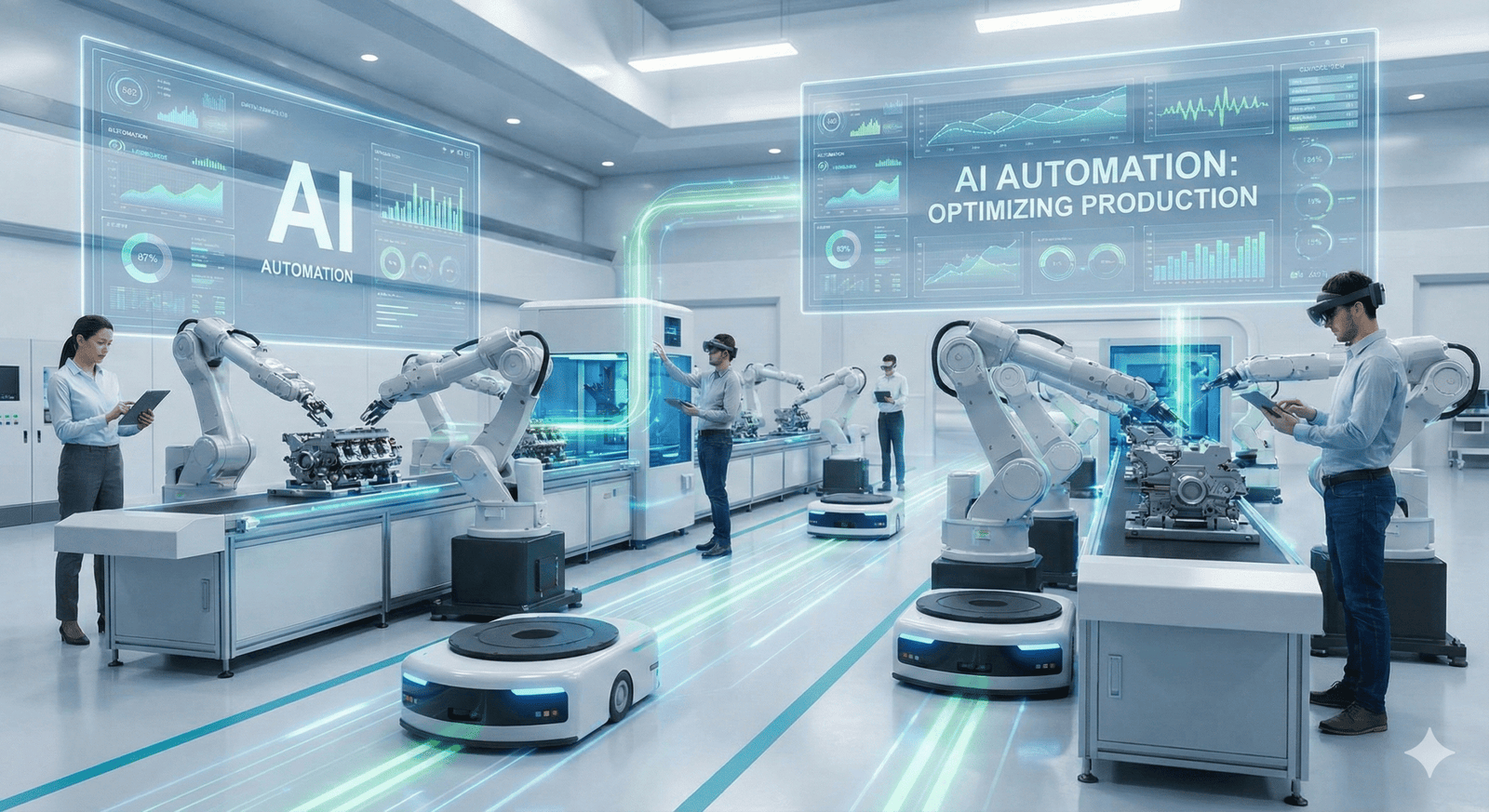
Artificial intelligence is no longer a far-fetched concept for American businesses. By 2025, AI workflow automation has evolved into a practical, results-driven strategy that enables businesses to reduce costs, improve efficiency, and scale operations faster than ever.
From startups to Fortune 500 companies, US businesses are rapidly adopting AI-powered automation to remain competitive in a rapidly changing digital economy. This article delves into the key AI workflow automation trends that are changing how businesses operate across the United States.
What Is AI Workflow Automation?
AI workflow automation is the application of artificial intelligence to automate repetitive, rule-based, and decision-driven business processes.AI workflow automation is the application of artificial intelligence to automate repetitive, rule-based, and decision-driven business processes. Unlike traditional automation, AI systems can learn from data, adapt to new situations, and make intelligent decisions without requiring constant human intervention.Unlike traditional automation, AI systems can learn from data, adapt to new situations, and make intelligent decisions without requiring constant human intervention.
Examples include:
- Automating lead qualification using AI
- Intelligent customer support chatbots
- AI-driven invoice processing
- Predictive task routing and scheduling
Why US Businesses Are Investing Heavily in AI Automation
American businesses face rising labour costs, talent shortages, and rising customer expectations. These challenges are directly addressed by AI workflow automation, which:
- Reducing operational costs
- Eliminating manual errors
- Speeding up business processes
- Improving customer experience
- Allowing teams to focus on high-value work
As a result, AI automation is now seen as a strategic investment, not just a technology upgrade.
Top AI Workflow Automation Trends in the USA
1. AI-Powered Decision Automation
US companies are moving beyond basic task automation to decision intelligence. AI systems now analyze data, predict outcomes, and recommend or execute actions automatically.
Example:
-
AI deciding which leads should go to sales vs nurturing
-
Automated approval or rejection of loan applications
This trend significantly reduces delays and human dependency.
2. Rise of AI Agents and Multi-Agent Systems
One of the biggest trends in 2025 is the use of AI agents that act like digital employees. These agents can:
-
Monitor systems
-
Trigger workflows
-
Communicate with other AI agents
-
Complete end-to-end tasks autonomously
US enterprises are adopting multi-agent systems to automate complex workflows across departments.
3. Workflow Automation for Small and Mid-Size Businesses
Earlier, AI automation was limited to large corporations. Now, SMBs in the USA are adopting AI thanks to affordable tools and cloud platforms.
Common use cases:
-
CRM automation
-
AI-based email responses
-
Appointment scheduling
-
Marketing campaign automation
This democratization of AI is accelerating adoption across industries.
4. Integration of AI with Existing Business Tools
Modern US businesses do not want to replace their entire tech stack. Instead, they are integrating AI with tools like:
-
CRMs (Salesforce, HubSpot)
-
ERPs
-
Accounting software
-
Marketing platforms
AI workflow automation now focuses on seamless integration, ensuring faster ROI and smoother adoption.
5. Intelligent Customer Support Automation
AI chatbots and virtual assistants in the US have evolved from simple FAQs to context-aware support systems. These AI systems can:
-
Understand customer intent
-
Access internal databases
-
Resolve issues without human agents
-
Escalate complex cases intelligently
This trend is transforming customer experience while reducing support costs.
6. AI-Driven Process Optimization
US enterprises are using AI not just to automate workflows, but to optimize them continuously. AI systems analyze process performance and suggest improvements in real time.
Benefits include:
-
Faster turnaround times
-
Lower error rates
-
Improved compliance
-
Data-backed process decisions
7. Focus on Security and Compliance Automation
With strict regulations in industries like healthcare, finance, and SaaS, AI automation is now being used to:
-
Monitor compliance
-
Detect anomalies
-
Automate audit trails
-
Reduce security risks
This trend is especially strong among US enterprises dealing with sensitive data.
Industries in the USA Leading AI Workflow Automation
-
Healthcare – patient scheduling, billing, claims processing
-
Finance & FinTech – fraud detection, approvals, reporting
-
E-commerce & Retail – order processing, support automation
-
SaaS & Technology – DevOps, customer onboarding
-
Real Estate – lead automation, document processing
Challenges US Businesses Must Address
While adoption is growing, businesses must also handle:
-
Data quality issues
-
Integration complexity
-
Change management
-
Ethical and transparency concerns
Companies that address these challenges early see faster and more sustainable results.
The Future of AI Workflow Automation in the USA
By the end of this decade, AI workflow automation will move from supporting roles to core operational systems. Businesses that adopt early will gain a long-term competitive advantage, while those that delay may struggle to keep up.
AI automation is no longer optional — it is becoming a business necessity.
Final Thoughts
AI workflow automation is fundamentally transforming how US businesses operate, compete, and grow. From intelligent decision-making to autonomous AI agents, the trends shaping 2025 are redefining productivity and efficiency.
Companies that invest in the right AI automation strategy today will lead their industries tomorrow.